Asphalt Paving · Fort Worth, TX
Asphalt Milling in Fort Worth, TX
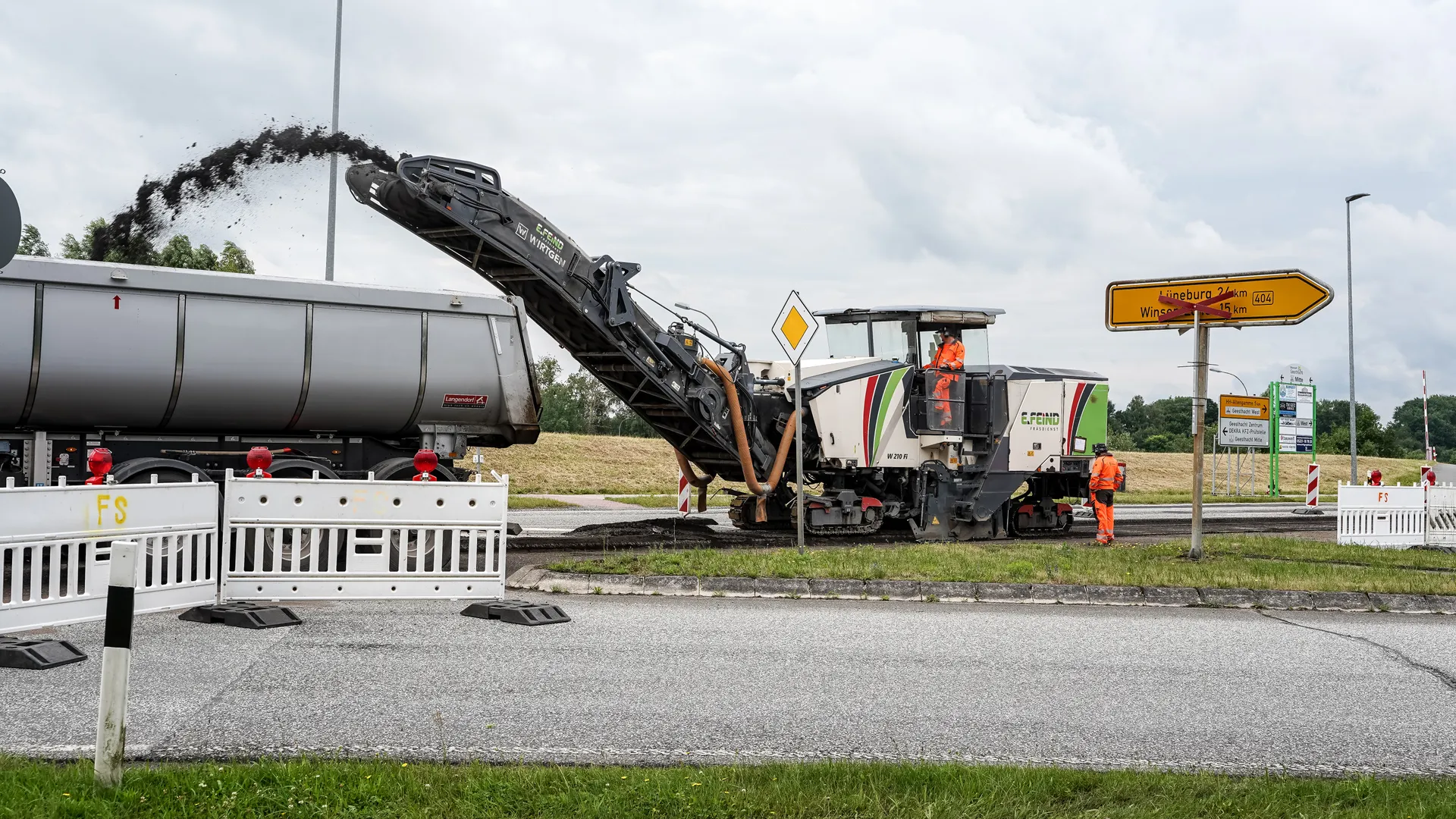
Grind first, pave second. Asphalt & Paving South Fort Worth runs a Wirtgen or Roadtec milling machine ahead of most overlay jobs across Forest Hill, Benbrook, Crowley, and Everman — 15 years cutting profile, edge, and full-depth mills on this side of Tarrant County. Call (817) 632-9447 and a milling scope shows up in writing before the drum ever touches your lot.
Milling isn't a demolition step you tack onto an overlay quote. It's how a paving crew controls elevation instead of just building on top of a problem — grinding off the top 1 to 2 inches of worn asphalt so the new surface finishes flush with a garage slab, a curb line, or a catch-basin rim instead of climbing above it. Skip the mill and every inch of fresh mat you lay is an inch you've raised the grade, whether the site can afford that inch or not.
On South Fort Worth's low, flat ground that inch decides which way water runs. We mill four ways depending on the job: full-depth removal down through the structural section on a failed base, surface or profile milling to correct rutting and restore a level plane, edge and transition milling that feathers a new mat into an existing gutter or apron without a lip, and pre-overlay milling that sets up the base for asphalt resurfacing. Milled material becomes reclaimed asphalt pavement (RAP) — ground off, hauled, and recycled back into new mix rather than dumped.
The scope gets written down before equipment shows up: milling depth, disposal or RAP handling, and how the milled section ties into what's next — an overlay, a full asphalt paving rebuild, or a striped-and-open parking lot. We're reachable 24 hours a day at (817) 632-9447 when a milled section can't sit open overnight.
What We Do
Our Asphalt Milling Services in South Fort Worth
Not every job needs the same cut. We scope milling by what the surface and the grade actually need, then match the machine and depth to it.
Full-Depth & Profile Milling
Full-depth milling grinds a worn or rutted surface down to sound base, usually 2 to 4 inches on a driveway or lot, and takes roughly 0.5 to 2 days depending on square footage. Profile milling is the lighter version — cutting just enough to erase wheel-path rutting and low spots so the plane is level again before anything new goes down.
A Wirtgen or Roadtec cold planer does the cutting on both; the difference is depth and what the base underneath tells us it needs. We check that base before we quote the cut, not after.
Edge & Transition Milling
Edge milling feathers a new mat into whatever it's meeting — a gutter, a concrete apron, an adjacent lot's pavement, a garage threshold — so there's no lip to trip a wheel or catch water. On the low south side, a butt joint left proud by even half an inch turns into a standing puddle at the next rain.
We mill these transitions to match flow lines, not just elevations, so runoff keeps moving toward the inlet or curb line instead of pooling at the seam.
Pre-Overlay & Milling for Recycling
Before a mill-and-overlay on asphalt resurfacing, we mill the top 1 to 2 inches so the new wearing course finishes level with curbs, slabs, and drainage inlets instead of building height over them. That grind-off doesn't get landfilled — asphalt is reclaimed at close to 100 percent nationwide, and 101.4 million tons of RAP went back into new mix in the 2024 season alone.
Milling runs $0.30 to $1.50 per square foot on top of the overlay cost, and it's the step that keeps a resurfacing job from quietly raising your grade.
The Benefits
Why Milling Before an Overlay Matters Here
Paving straight over a worn surface is faster to quote and worse to live with on ground this flat. Milling first protects the things an extra inch of asphalt would bury.

Keeps the Flow Line Where Water Expects It
South Fort Worth's low, near-flat lots drain toward the Clear Fork Trinity, Sycamore Creek, and the Benbrook Lake floodplain, and every drainage plan assumes the surface stays at the grade it was cut to. Paving straight over a worn mat without milling raises that grade and can bury the pitch that used to carry water toward the catch basin.
Milling re-establishes the original profile before the new mat goes down, so the low south side keeps shedding water the way it's supposed to instead of ponding against a curb that used to be a full inch taller than the pavement beside it.
Preserves Curb Reveal and Door Clearance
A curb only works as a curb if pavement doesn't climb up to meet it — lose that reveal and water rides up over the top instead of stopping there. Garage doors, gate bottoms, and loading-dock levelers all have a fixed clearance too, and a no-mill overlay eats into every one of them by its full thickness.
Milling first keeps the finished surface at the elevation those fixed points were built for, which matters more here than it does on ground with somewhere for the extra inch to drain to.
The Old Surface Gets Recycled, Not Wasted
The material our milling machines grind off doesn't leave the loop — it's crushed and blended back into new mix as reclaimed asphalt pavement (RAP). The industry reclaimed 101.4 million tons of it in the 2024 construction season at a rate near 100 percent, saving an estimated $4.7 billion versus all-virgin material, which makes asphalt the most-recycled product in the country.
That recycling loop is part of why milling and overlay work stays well under the cost of a full-depth tear-out on the same footprint.
Why Us
Why South Fort Worth Trusts Our Milling Crew
Fifteen years reading which cuts hold grade on this side of Tarrant County — and which shortcuts come back as a drainage complaint.
The Right Machine for the Cut
A full-depth structural mill and a light profile pass call for different drum setups, and we run Wirtgen and Roadtec cold planers sized to the job rather than one machine forced to do both. That match keeps the cut depth consistent across the pass instead of gouging low spots that telegraph straight through the new mat.
We Grade the Cut, Not Just the Surface
Fifteen years milling driveways and lots from Forest Hill through Crowley and Everman means we read a site's flow line before the drum starts, not after. On the flat south side that reading is the difference between a mill that restores drainage and one that just removes asphalt.
Written Scope, TxDOT-Standard Work
Milling depth, disposal or RAP handling, and the tie-in to whatever comes next go on paper before equipment mobilizes, and the cut itself follows TxDOT and Superpave milling practice. Calls come in 24 hours a day at (817) 632-9447 when a milled surface needs to get covered before weather turns.
Milling is almost never the whole job — it's the step that sets up whatever comes next. See how the ground-off surface gets replaced on asphalt resurfacing, or how a full asphalt paving rebuild handles a base that's failed past milling and overlay. For lots that need striping once the new mat cures, see parking lot paving — the same South Fort Worth paving crew runs every step from the first cut to the final line.
Frequently Asked Questions
What's the difference between asphalt milling and resurfacing?
Milling is the removal step — a cold planer grinds off the top 1 to 2 inches of worn asphalt to restore a level plane and correct elevation. Resurfacing is what usually comes next: a tack coat and a fresh overlay laid on top of the milled surface. You can mill without overlaying the same day if the section needs to sit exposed briefly, but on most South Fort Worth jobs the two happen back to back so the milled surface isn't left open to weather. Full details on the overlay side live on our asphalt resurfacing page.
How much does asphalt milling cost in South Fort Worth?
Milling runs $0.30 to $1.50 per square foot, typically added on top of an overlay's $1.50 to $4.50 per square foot when the two are scoped together. The range depends on milling depth, how much of the site needs edge or transition work around gutters and aprons, and how far the milled material has to be hauled. We quote milling as its own line item in a written scope, not folded invisibly into an overlay price.
Why mill before an overlay instead of just paving over the old surface?
Paving straight over an existing surface without milling raises the grade by the full thickness of the new mat — usually 1 to 1.5 inches. On South Fort Worth's low, flat lots that inch can bury the pitch that carries water toward a catch basin, push runoff up against a curb that used to be tall enough to hold it back, or eat into a garage door's clearance. Milling first restores the original elevation, so the new surface goes down at the grade the site's drainage was designed around instead of a grade an inch higher.
How long does milling take on a driveway or parking lot?
A typical lot milling pass runs 0.5 to 2 days, depending on square footage, milling depth, and how much edge and transition work the perimeter needs. A residential driveway is usually on the shorter end of that window; a commercial lot with islands, drive aisles, and multiple gutter tie-ins runs longer. Milling and overlay together on a standard driveway or small lot typically fit inside a 1 to 3 day overall schedule.
What happens to the asphalt that gets milled off?
It becomes reclaimed asphalt pavement, or RAP — ground off by the milling machine, hauled to a plant, crushed, and blended back into new asphalt mix rather than sent to a landfill. The U.S. asphalt industry put 101.4 million tons of RAP back into use in the 2024 construction season at a reclamation rate near 100 percent, making asphalt the most-recycled product in the country and saving an estimated $4.7 billion versus using all-virgin material. Your old surface is raw material for someone's next mix design, not waste.
Does milling fix drainage problems, or does it just remove old asphalt?
It can do both, but only if the mill is cut to the right profile. A straight-depth mill just removes material evenly and doesn't correct a bad slope on its own — but profile milling, where the drum cuts deeper in some spots than others, can re-establish a pitch that's gone flat or started ponding. On South Fort Worth's low ground draining toward Sycamore Creek and the Benbrook Lake floodplain, we survey the flow line before milling so the cut restores drainage instead of just taking off the top layer and leaving the same low spot behind.
Can milling be done on just part of a driveway or lot, or does it have to be the whole surface?
Partial milling is routine — a wheel-path rut, a section around a failed patch, or the transition edge along one side of a lot can be milled on its own without touching the rest of the surface. That's common on parking lots where only the drive aisles show rutting while the parking stalls are still sound. The key is tying the milled section back into the untouched pavement with a clean, feathered edge so there's no lip where the two meet.
What is edge milling, and why does it matter at a gutter or driveway apron?
Edge milling cuts a tapered transition into the existing pavement where a new overlay is going to meet something it butts up against — a concrete gutter, a driveway apron, a neighboring property's asphalt, or a garage threshold. Without it, the new mat's full thickness creates a hard lip at that seam, which catches a tire, holds standing water, and is usually the first spot to crack. We mill these transitions to match the existing flow line so water keeps moving toward the gutter or inlet instead of pooling at the joint.
What machines do you use for milling in South Fort Worth?
We run Wirtgen and Roadtec cold planers, sized to the cut — a compact unit for driveway and edge work, a larger drum for full commercial-lot passes. Machine selection depends on the milling depth called for and how tight the site access is; a lot with islands and light poles needs a more maneuverable planer than an open field mill. Matching the machine to the job keeps the cut depth consistent across the pass rather than uneven in tight corners.
Is milling required before every overlay, or can some jobs skip it?
No — a thin overlay without milling is a legitimate option when the surface has light-to-moderate wear, no real rutting, and enough clearance to spare the extra 1 to 1.5 inches the overlay will add. We check clearance at aprons, curbs, and inlets before recommending that route, because on the low south side that inch can be the difference between water draining and water pooling. When there's rutting, moderate cracking, or the grade can't absorb the lift, milling first is the honest call — covered in more depth on our asphalt resurfacing page.
Get Your Milling Scope in Writing
Full-depth, profile, or edge-transition — we grind to a written scope, not a guess. Call (817) 632-9447, Open 24 Hours.
(817) 632-9447